
TEAM GOALS
Chapter 7 is the third of four chapters dedicated to building a team around you. Chapter 5 offered a process for effective hiring, and Chapter 6 describes the skeletal structure of a high-performing team. Now, Chapter 7 offers guidance on effective alignment of your team in pursuit of your goals.
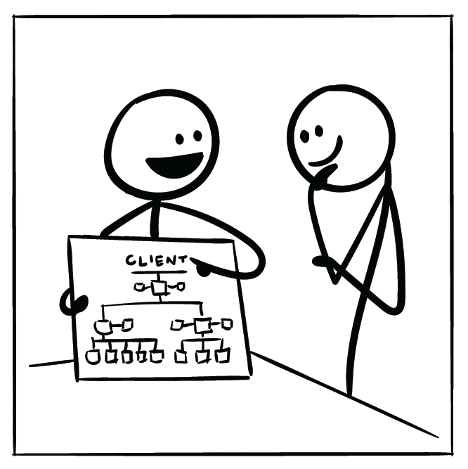
For starters, you must go to 10,000 feet and look down upon your org chart. Only a few teams can even produce an org chart when I ask, and many times, these are hastily drawn boxes that contain names, not roles. Even worse, all 12 names report to the agent. If this describes your team, you could make a huge improvement. Here are three tactics to enhance your team structure:
- Use the wisdom of Stephen Covey and “begin with the end in mind.” I like to think about how your org chart would be viewed by a prospective client. Wouldn’t it be powerful to say something like this in a presentation: “We built our team to serve your needs. That’s why we have three primary channels, with a leader responsible for each service line.”
- Use the wisdom of Michael Gerber and “envision your team as if it were fully mature.” If your long-term vision is to have, as an example, service lines for leasing, property management, investment sales and mortgage brokerage, craft the org chart accordingly. Put your name next to the role described in every box. Over time, work on replacing yourself in every possible box. This way, you are always progressively achieving your vision.
- As you put roles on your org chart, employ the proven mantra, “form follows function.” If you were an architect commissioned to draw a building, you could not proceed until you knew the function the building would serve. The same should hold true for your team: what function are you trying to accomplish? What, then, must the roles (the form) be to achieve that function?
If you’ll take time to carefully define the function of your team, the roles on the team will become evident. When your org chart is compelling to the prospective client, they will choose you for their project. That’s the payoff for alignment. What improvement could you make to your org chart?
To receive a copy of the Revisited Edition of Thrive at the end of this 14-part series please click here.